Showing posts with label culture system. Show all posts

Tuesday, 30 September 2014

When inequality is the problem

There is a large argument about inequality these days. When some say that it doesn't matter, total wealth is the important, other dudes, as Joseph Stiglitz or Paul Krugman (both Nobel laureates), say that matters and is a fact that the gap between rich and poor is growing. Many people have been experienced it, as movements as Occupy Wall Street, Indignados and other demonstrations have shown us. But what is the deal about it? Here two deep insights into the issue.

Inequality in poverty: Impeding Development.


In the book Why Nations Fail, the economist Daron Acemoglu and the political scientist, James Robinson, try to answer the question why some countries are wealthy while others are stuck in poverty. Their answer lays on something we have talked before, and could be considered part of culture: Institutions.

Although in the first place they reject plain explanations about culture, they thought about it like "ideological issues", as a work ethic or wealth ambition. They noticed that places with same culture actually have different income, as Nogales town in the US-Mexico border, a "mexican culture" town splitted in two, with one side rich (US) and another side poor (Mexico). Or Korea, a country splitted in two, one very rich (south) and other very poor (north), but with same cultural basis. So they relay their explanations in something more specific: political institutions (+economic institutions). To put it simple, there are two kinds: extractives (poor countries) and inclusives (rich ones).

For these two famous researchers (the gossips say that Acemoglu will be Nobel Prize soon), extractive institutions are those that have typically a group called "elite" that extract wealth and resources from the rest of the society. Thus, the rest of the society loses all incentives to be more productive, because more effort doesn't mean enhance of profit for them, but for the elite. Besides this elite will do everything possible to preserve their privilege as discourage any innovation that can produce a dynamic society (fear of creative destruction). It also will destroy in advance any opposition or competition to their power.

Sadly, oppressed people will continually try to free themselves despite elite efforts, turning the system in very unstable society. And if one group achieve overthrow the elite, it is likely that they fall into "the iron law of oligarchy", and the victorious group become the new elite, holding privileges and keeping extractive institutions with the rest. Power tends to corrupt, isn't it?


Forced work fields of Khmer Rouge in Cambodia. While Khmer was looking for terminate with elite power and colonialism in Cambodia. Once in the power, they emphasized extractive institutions, they even killed 2 millions of people. Others extractive institution examples are feudal servilism, slavery and most common, oligarchies of crony capitalism.

However if such revolution is widespread and inclusive, there is a chance to create institutions to put a limit on political power of new rulers (as, but not necessarily, division of power, effective power alternation, voting system) and open opportunities to everyone can influence policy, creating changes and dynamism. Inclusive institutions are created and that allows improvements and innovation. The benefit is more likely to be distributed by individual o collective effort, so there is incentive to improve productivity, and talents of people will be better distributed, leveraging different part of the whole society. Then, there is less institutional inequality and no distortion on a system that could be caused by a too powerful elite.

When queen Elizabeth I of England was introduced to the first spinning machine design, she was astonished, but she rejected to give a patent to their inventor. She said that machine does the job of 10 workers and 10 workers without a job do revolts. Thus, she, as a queen, should avoid riots, in order to maintain the order and her head over her shoulders. Everything changes after Glorious revolution in 1688, when parliament (with widespread interest representation) granted patents to many invents which led to industrial revolution.

The book also point out that such political institution allows a more fair scenario and economy growth, destroying inefficient economies and creating some new and better (creative destruction). Of course there should be a political guarantees to maintain economic inclusive institution, like markets, as such. For instance, an accessible justice system in which the less powerful were in the same stance than the most. By all means, it is possible that the economic system tends to segregation, specially if there is no political guarantees, specially if inclusive economic institutions aren't backed by inclusive political institutions.


This could be the case for China and Singapore, in which inclusive economic institutions are under extractive political system. Then, economic growth won't last. Repeating rapid economic growth under extractive institution (as it happened with URSS in the '50, '60 and '70s), but unsustainable in time. Even under inclusive political institutions there are other threats, as it happened with the trust crisis in 1890 and financial crisis in 2008 in US, while markets created high concentration of wealth (inequality), making american democracy tremble.

Unfortunately, when some countries became rich because of their new inclusive institutions, they have increased global inequality. Because their powerful influence among the rest, it led to colonialism. It is a kind of inequality that has left rich countries as extractors of natural resources of the rest, preventing the development of their own inclusive institutions, supporting local elites to keep the world status quo.

Inequality in wealth: Impeding Well-being.


The epidemiologist Richard Wilkinson and Kate Pickett, in the book "The Spirit Level: Why Greater Equality Makes Societies Stronger", give us some reasons to worry about inequality.

If we take some data of economic income per person and compare it with data about well-being (mainly health, more familiar issue for the authors) will see there is a relation between income and well-being. That is, the higher the income per person in a country, better welfare. However, this relation is completely blurred over $ 20,000 per capita, when add to more money does not ensure any improvement.


However, the researchers took the data of the rich countries and compare with inequality of income rather than plain income. Its result is quite impressive. Among high income countries, the well-being increase when inequality decrease.


The authors explain some effects of inequality in well-being through permanent stress (cortisol levels). As they say, inequality generate stress. People is more worry about others opinion, is more insecure and depressed. They develop some feelings of superiority and inferiority, which impacts on health and also on well-being, not just the poorer, but also with the rich. Have you ever felt the pressure of social inequality? the anguish of constant comparison?


Sources:

Richard Wilkinson and Kate Pickett, 2009 ,The Spirit Level: Why Greater Equality Makes Societies Stronger.
Daron Acemoglu and James Robinson, 2012, Why nations fail.

Tuesday, 12 August 2014

8 rules to avoid environmental disaster

An interesting point of view to understand culture is see it like social arrangements that allow us survive, adapt and live in a natural or social world. These sets are above of individuals, are contracts, set of rules, values, customs, limits that we enforce to ourself - consciously or not- to achieve some goals. Are institutions.

Sorry folks, but institutions aren't buildings. Instead of that, are a set of rules.


For example, marriage institution is a set of rules that limit sexual relationships, heritage, alliances between families or groups. It installs a kind of link and sets rules, that helps to avoid conflicts about reproduction right, and keeps some values (some societies is about love, in other childs, or family, status, whealt, etc).

There are political institutions, as democratic vote, or economic ones, as markets. All of them regulate our actions. How we behave, which strategies are available to reach our goals. There were people that thought there are as many institutions as social needs. While others thought that institutions were imposed and because of historical reasons... But How is this related to environment?  

The tragedy of the commons


In 1968, Garrette Hardin published in Science magazine an hypotetical situation: A common grassland (resource), which is used by several farmers to feed their animals. If those shepherds act from an individualistic and rational point of view to maximize their benefit, they will try to put on grassland as many animals as they can. If everybody act like that, soon the common resource will be plenty of animals and they will eat it all, leading to the dead of all animals. It will be different if the resource wasn't common, but divided among shepherds. Then, they will try to avoid over-exploitation, knowing beforehand that no one will use the resources they don't use.

This has been used as an argument to support pro-private-property-rights positions. But the same article said that is just one possible action and it is hard to take in major commons as air (and pollution) and oceans, that couldn't be divided. If we still pushing those commons the tragedy will become innevitable.

But commons are hypotetical, What occurs in real life?

The commons survive.

Some anthropologists researches have shown us that most of the communities with common resources have
several strategies to avoid its overexploitation. They use tabus that forbid fishing or rules that say when to move cattle to other lands to avoid overconsumption. However, many communities transform those rules when they start some commerce and market relationships. Markets encourage intensive exploitation of resources to exchange.
Palau (Micronesia), fishermen have strong norms to limit fishing
The nomad shedherds Bassin (Southern Iran) have rules and rutes very well stablished in order to take care of glasslands

However, in 1990, E. Ostrom (political scientist and Nobel Prize) compiled and compared many cases were communities were successful conserving their common resources. She described a set of institutions that help them make it. Those institutions were specifics rules that community impose and reproduce in next generations:
  1. Clearly defined boundaries (effective exclusion of external un-entitled parties);
  2. Rules regarding the appropriation and provision of common resources that are adapted to local conditions;
  3. Collective-choice arrangements that allow most resource appropriators to participate in the decision-making process;
  4. Effective monitoring by monitors who are part of or accountable to the appropriators;
  5. A scale of graduated sanctions for resource appropriators who violate community rules;
  6. Mechanisms of conflict resolution that are cheap and of easy access;
  7. Self-determination of the community recognized by higher-level authorities; and
  8. In the case of larger common-pool resources, organization in the form of multiple layers of nested enterprises, with small local CPRs at the base level.

Commons become global


One kind of global institution created to stop global warming and protect our major common -our planet- is Kyoto protocol for climate change. It is an agreement in which every country commit to reduce their emission greenhouses gases. Its aim was reduce global emission on 5%. If the countries couldn't achieve their goals, they will be fined.

However, as Ostrom would say, there is no point if the protocol is not ratified by every country. Sadly USA didn't, despite to be the major greenhouse gases producer. And Canada, seeing they wouldn't achieve their goals for 2012, quit. And the tragedy becomes more real.

Sources:

G. Hardin "Thagedy of the commons", Science, 1968
R. E. Johannes "Words of lagoon: Fishing and marine lore in Palau distric of Micronesia", 1981
E. Ostrom "Governing the Commons: The Evolution of Institutions for Collective Action", 1990
Ember y Ember: Sistemas económicos: ¿Lleva la propiedad comunal al desastre económico?, 2010
http://davidruyet.wordpress.com/

Sunday, 15 June 2014

9 types of personalities according their culture

To be honest with ourselves we have to recognize this: We love short list articles that simplify everything. And we love much more if is about people. That is the main reason why internet has plenty of articles that are tilted like this one. But sorry folks, this article doesn't have a list, but something much more interesting...Why we love lists about "types of people" and how culture helps us to do that.

Now, If you really really really want to classify people by culture, go ahead, there are plenty of consultant services that sells lies such services, following the scientific method of flipping a coin, and use pre-judgements as theory. Otherwise, be smart and keep reading.

How we understand our world


One of the main functions of culture is to bring us explanations of how the world works. Culture (through socialization) brings us the main frame to understand everything that surrounds us. It is in that way because our brains can't handle the complexity of our world (such theories about we just use 10% of our brains- are false, we use it all, well, not everybody), so culture helps us. Otherwise we should re-invent everything. That is neither clever nor possible. Could you do it?

Just imagine that you are the only survivor of your civilization. Could you bring it back with your actual knowledge? We live surrounded by many things that we don't know where they come from neither how they were made. As nobody is specialist in everything, culture helps to fill the gaps.

Ofcourse that means some difficulties as well. As culture helps us to not think everything again, giving us some pre-constructed scheme, there is a trap of not thinking at all. Pre-built concepts, better known as prejudice, could makes our life hard as rock. Not just limiting our knowledge, but suffering by other's limited knowledge.

Luckily, a dynamic culture could avoid such issues (as scientific culture does), changing those concepts to adapt better to reality, whether is social or material.

Anyway, we simplify everything in order to put it inside our mind. Ofcourse, this applies for people too.


Azimuthal equidistante: Commonly see in UN's flag
Not scientific reasons to put north on top, but political: Australia and New Zealands version, on top and in the middle.

World maps: Literally culture brings us schemes of the world. We are probably used to Mercator world map projection, but there are many. Some are much more accurate to how real world looks like. So, Mercator is one among other cultural possibilities.

Reducing social complexity

With our actual world population (7 billion), humans cannot get to meet eachother very well. Nevertheless our system works (bad, good, but works) and we trust and live with many strangers. There is too much people to be processed by our brains, so culture helps us again, putting them into categories. And sometimes we help to improve them.

For example, some societies tend to classify people by ancestry, linage, totem or family name. That allow us to build a "mental map" to know who is who. It is certainly a pretty common system. Ancient Rome used to divide their populations in 12 tribes to identify their citizens, while in actual european (and others) aristocracy, family name is an important social classificator.

In larger societies, with more complexity, people use several categories as interest groups (religion, political parties, sport teams, etc), place (neighborhood, city, country), skin color, social class. According to that, isn't weird to find a very strict classification social system in India. With huge amount of people, with several languages, ethnics, religions, "caste system" brings certain kind of traversal order to deal with such a complexity.


Horoscope is an old people classification system by day of birth. But, Can we be reduced to just 12 kind of personalities?


It is likely that we try to make our own complexity reduction of people, trying to anticipate their behavior, get to know if someone is trustworthy. Ofcourse we put different levels of stringency and some of those categories could led to prejudice. But we hold them because allow us to deal with complexity and we'd feel disarmed and frightened without such "mental map".

So isn't strange that some sciences, as psychology, tried to sort "types of personality", and magazines and internet has plenty of "personality test" to get to know who you are. Or try to predict if we will like someone by the music they hear. But, Is it really possible classify human complexity into a couple of categories?

It looks like that humankind is much more complex, but we keep trying to reduce it to make it fit into our minds. So, What lesson we take of all of these? Besides that we love to sort people out. We have to keep in mind that when we put the world into categories, we are also doing it with ourselves. We put limits to our actions, trying or pretending to don't look like the others. I think that is enough with categories that others put on us to add some more. If we are going to use them (because are useful) is good not to be too strict, because "Whatever measure you deal out to others will be dealt back to you".

Some sources:
R. Rappaport, 1994, Spatial organization
E. Durhkeim and M. Mauss, 1902, Primitive Classification

Thursday, 10 April 2014

Culture and Environment: the myth of environmentalist ancestor II

On a previous article I told you how ancient people caused great impact on environment of New Zealand (of course modern european settlers caused a much bigger) and in the rest of the world. But large ancient civilizations does as well. That impact was so huge that they put a lot of pressure on their lifestyles and sometimes created a collapse of their civilizations

Cannibalism And War


One of biggest ecological devastation stories that ends in social devastation is about mesoamerican civilizations. it is believed that Olmec civilization collapsed because a drought and other ecological reasons. But the most sad is aztec's history. Very often related to a high developed society and technology (irrigation, astronomy, maths) with a structured empire.

Cannibalism is a documented practice all over the world and we could find some patterns on it. Is pretty common that cannibalism as cutural practice is related to religion-ritual practices. Sometimes a kin from who we are trying to consume their vital force. Sometime is an enemy, a prisioner offered to the gods and their thirst of blood. This last one is the main reason for aztecs, who used to go to war to get prisioners to sacrifice to gods, specially in bad times as poor harvest.


However, cannibalism is usually practice as something casual, in Aztec empire was daily. As described by Marvin Harris, it was hundreds of thousands of sacrifices documented in the number of human skulls found in Tenochtitlan, the Aztec capital. Harris wonders what motivates such carnage. On the one hand there is an especially strong ecological predation in the Mesoamerican region which became in poor crops. The sacrifice was a way to implore the gods for better crops . But it also adds a more practical explanation.

Based on the Harner's study, Harris explains that mesoamerica lacked in domesticated animal species that provide protein to the diet. The products of hunting and domesticated turkeys were exclusive of elite, so the sacrifices served to distribute proteins to population and avoid political and social collapse.
Cannibalism is often a part of the myth of the agressive savage, usually related to war, famine and the moral vacuum (although false as well). However, we see it has also been practiced in high civilizations product of human impact on the ecosystem itself, especially in populous societies.

How does some communities do to control impact of population on environment? On next article

Saturday, 29 March 2014

Culture and environment: the myth of environmental ancestor

With the spread of environmentalist movement, becoming stronger because the powerful threat of global warming, is pretty common to hear about the idea of ancient people that lived in total harmony with nature and their traditional culture and ancient wisdom were much better adapted and had no harm to the environment.

The most common reference to those myths used to be Chief Seattle's letter to President of the United States at the time. The letter warns about harm to nature has important consequenses, like "The earth does not belong to man, man belongs to the earth. All things are connected like the blood that unites us all. Man did not weave the web of life; he is merely a strand of it. Whatever he does to the web, he does to himself". Heartbreaking but sadly false (It was actually written by Ted Perry, Hollywood writer. Not because it wasn't an ecological true). And not just because of the author of the letter, but where could they learn that lesson.

Human Impact in ancient environment


The humankind has spread all over the world, adapting himself to every environment that has faced. Mountains, jungles, oceans, "polar cold" and even space. But in each one has made an impact.

The very faraway islands of New Zealand are great places to check this out. Because their positions on the world map, those islands have been one of the last places that humans have colonized. The first polynesian people arrived just 1000 years ago which, for archeological record, is the same as yesterday.


Human settlement map by genetics studies(that match with archeological record). When first humans arrived to NZ, in Europe Carolingian Empire had fallen, Vikings had reached America, toltecs had reached their maximum civilization point and Reindeer had extinct in Scotland
This people originated Maori culture (very famous around the world because of haka, war dance used by All Blacks, national rugby team of New Zealand). Maori used to practice gather-hunting and horticulture as well. Their beliefs are animist (which means they give soul to nature and natural forces), and that is why people relate them with environmental beliefs.

Despite being a coast away in the ocean, Maori culture is also away to be the realm of utopia. As it happened on the rest of the world, where hunt-gathering populations killed big fauna (as optimal foraging theory said, are the most efficient to hunt, means more calories by less work/hour) Maoris hunted several species to the point of extinct them.


Map that shows native forest extension in 1000 (when Maoris arrived), in 1840 (when europeans arrived) and now
In NZ, Maoris extinguished by direct action (hunt or habitat destruction) or indirect action (introducing of other species as rats and dogs): 40 species of birds, 1 of bat, 3 o 4 of frogs, several lizards. Among those animal we found Moa, big fauna, big non-flying bird, bigger than ostrich (some times 3 meters/ 10 feet tall). Also Haast's Eagle, an eagle so big that used to hunt Moas.

Those are not the only islands where such a thing has happened. In Madagascar were extinguished giant land turtle, elephant bird, giant lemur, pygmy hippo, among others. Same has happened in Great Britain with elephants, lions, reindeer, beavers, bison. In Hawaii, giant geese. In Chipre, elephants and deers. In caribbean islands giant rodents and colossal owl. For instance, in Eastern Island the damage was so huge that they cut off all trees and hunted all animals. The ecological impact was so brutal that conflicts started among human populations and war and even cannibalism had happened. (on next article).

Sources:

http://envirohistorynz.com/2009/12/15/impacts-of-the-maori-on-the-environment/
http://frentepopulardejudea-nenya.blogspot.com/2011/11/haciendo-el-indio-la-falsa-carta-del.html
Cohen M.K. 1994. Demographics and human expansion.
Harris M. 1986 Canibals and Kings

Friday, 21 February 2014

Culture science I: anthropology

Many disciplines have faced the "culture issue", many more have used it as explanation to theories. Culture has been use by many disciplines as economics, politics science, art studies, literature and linguistic studies, policy makers, psychology, sociology, human geography, cultural management, history, medicine, biology and so on. Even many entrepreneurs and sport coaches use it. And of course, probably you and me trying to give an explanation of some thing that we don't fully understand.

But the most obsessed discipline with culture concept is, probably, anthropology. Even some define it as culture science. But that is not exact. Anthropology is the behavior science that study human adaptation, evolution and diversity. And that is why culture is so important for anthropologists.

Anthropologists think in culture as the way that humans adapt to their environment. They inscribe their vision of culture on the version that talk about costums, norms, modes of living, a mind set. They say that humans adapt their environment through their biology, but mainly through their culture. Technology, knowledge, costums, everything helps to adapt them to their environment. In that way, culture explain diversity, but also evolution, as that something that change across the time.

Culture as System


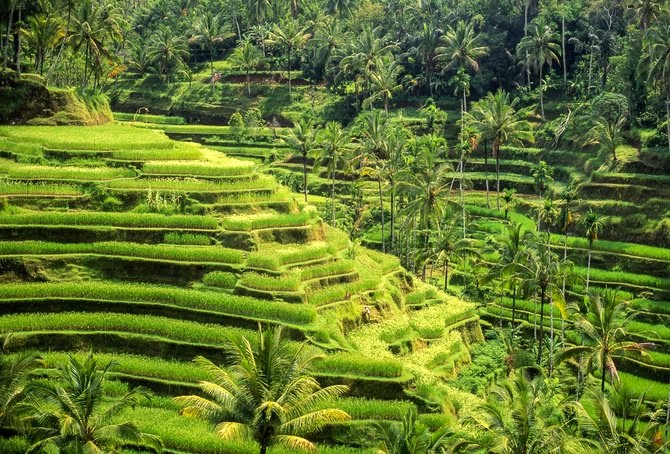
In bali, the rice  fields design are determin by religious factors (like do a proper ceremony), environmental factors (amount of rain) and social factors (colective work is organized acording wedding alliances). Here, culture, is a very integrated system.
The concept has been very central for anthropology, so some people think that the discipline started with it. This could be right in USA, where the discipline began with a school called culturalism. Founded by Franz Boas, this school thinks that in order to understand humankind we must learn their lenguage, costums, way of living. We must relate all aspect of social life like human ecology, linguistic, history, social organization, mode of production, mithology, beliefs. All that organized as a system. We call this point of view Holism.

For culturalists, culture is a proper unit of study, different to "psychi" for psychologists, basicly because is colective instead individual. Culture is shared customs, behaviors, mind sets. All related with different and interconected variables. A whole product, a whole system. So culture study is very complicated thing, like the concept itself, but at the same time very interesting. Let see what has to tell us.

linkwea

Related Posts Plugin for WordPress, Blogger...